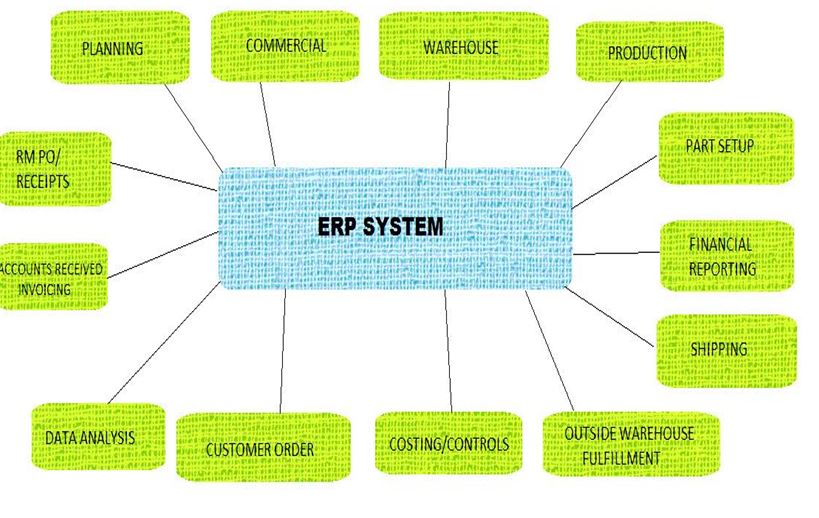
| Planning | Plan production, materials, and resources to meet customer demand efficiently. |
| Commercial | Manage sales, purchasing, customer orders, and supplier transactions from one platform. |
| Warehouse | Track inventory, stock movements, and warehouse operations in real time. |
| Production | Control and monitor the entire manufacturing process from raw materials to finished goods. |
| Part Setup | Create and maintain product, material, and component master data for manufacturing. |
| Financial Reporting | Generate accurate financial statements, profitability reports, and business insights instantly. |
| Shipping | Coordinate order dispatch, delivery schedules, and shipment tracking efficiently. |
| Outside Warehouse Fulfillment | Manage inventory and order fulfillment across third-party or remote warehouses. |
| Costing | Calculate product costs, production expenses, and profit margins with precision. |
| Custom Order | Handle customer-specific products and manufacturing requirements with flexible workflows. |
| Data Analysis | Transform business data into actionable insights through real-time dashboards and analytics. |
| Accounts Receivable & Invoicing | Automate customer invoicing, payment tracking, and outstanding receivables management. |
| RM PO / Receipts | Streamline raw material purchase orders, receiving, and inventory updates accurately. |